Stretching is a simple and effective way to enhance your overall health, improve mobility, and reduce muscle stiffness. Whether you have a busy schedule or prefer working out at home, stretching routines can be easily incorporated into your daily life without any special equipment. This beginner’s guide will help you understand the basics of stretching, offer guidance on how to stretch safely, and introduce easy stretches you can do at home.
Why Stretching Matters
Stretching helps lengthen your muscles and improve your range of motion. Regular stretching can:
– Increase blood flow to your muscles
– Reduce the risk of injuries
– Improve posture and balance
– Relieve stress and muscle tension
– Enhance physical performance
By making stretching a part of your daily routine, you support your body’s natural movement and keep your muscles flexible and healthy.
Types of Stretching
Before you start stretching, it’s helpful to know the two main types:
Static Stretching
Static stretching involves holding a stretch in one position for a period, usually 15 to 60 seconds. It’s effective for increasing flexibility and relaxing muscles. This type of stretching is best done after your muscles are warmed up, such as after exercise or a short walk.
Dynamic Stretching
Dynamic stretching uses controlled, active movements that gently take your muscles through their full range of motion. This is often done as part of a warm-up to prepare your body for physical activity.
Getting Ready to Stretch at Home
To stretch safely and effectively at home, consider these tips:
– Find a Comfortable Space: Choose a quiet spot with enough room to move freely.
– Wear Comfortable Clothing: Opt for loose or stretchy clothes that allow full movement.
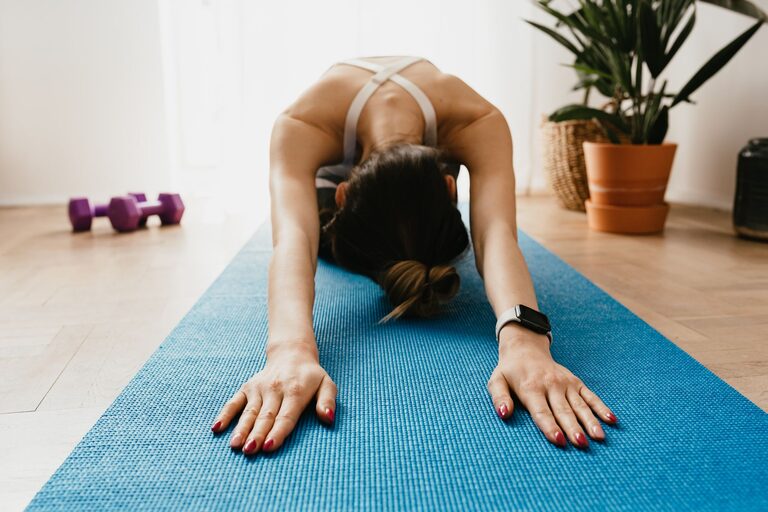
– Use a Mat or Soft Surface: A yoga or exercise mat can provide cushioning.
– Warm Up Slightly: Start with light activity like marching in place or arm circles for 3 to 5 minutes.
– Breathe Normally: Focus on steady and relaxed breathing during stretches.
Beginner-Friendly Stretches to Start With
Here are some easy stretches targeting key muscle groups. Hold each stretch for 20 to 30 seconds and repeat 2 to 3 times.
Neck Stretch
– Sit or stand tall.
– Gently tilt your head toward your right shoulder until you feel a stretch on the left side of your neck.
– Hold, then switch sides.
Shoulder Stretch
– Bring your right arm across your chest.
– Use your left hand to gently press your right arm closer to your chest.
– Hold, then repeat on the other arm.
Chest Stretch
– Stand in a doorway and place your forearms on either side of the frame.
– Step forward slightly until you feel a stretch across your chest.
– Keep your shoulders down and avoid arching your lower back.
Seated Forward Bend
– Sit on the floor with your legs straight out.
– Slowly reach forward toward your toes while keeping your back as straight as possible.
– You should feel a stretch along your hamstrings and lower back.
Cat-Cow Stretch (Spine Mobility)
– Start on your hands and knees.
– Arch your back upward while tucking your chin (Cat pose).
– Then, lower your back while lifting your head and tailbone (Cow pose).
– Repeat slowly several times.
Hip Flexor Stretch
– Kneel on your right knee with your left foot in front, forming a 90-degree angle.
– Shift your weight forward slightly until you feel a stretch in your right hip.
– Hold, then switch legs.
Calf Stretch
– Stand facing a wall.
– Place your hands on the wall and step one foot back, keeping it straight and heel on the ground.
– Lean into the wall until you feel a stretch in your calf.
– Switch legs.
Tips for Safe Stretching
– Never bounce or force a stretch; aim for gentle, steady pressure.
– Stretch both sides evenly.
– Stop immediately if you feel sharp pain.
– Be consistent — stretching daily or at least several times a week yields the best results.
– Drink water to stay hydrated.
Creating Your Own Stretching Routine
Start with 10 to 15 minutes per session. You might try:
– Morning stretches to wake up your body
– Break-time stretches if you sit a lot during the day
– Evening stretching to relax before bed
Record which stretches feel best and gradually increase the time you hold them as your flexibility improves.
Final Thoughts
Stretching at home is accessible, requires no special equipment, and benefits both your body and mind. By incorporating simple stretches into your daily routine, you’ll enjoy improved flexibility, better posture, and reduced muscle tightness. Remember to listen to your body and progress at your own pace. Soon, stretching will become a relaxing and rewarding part of your lifestyle.
Ready to stretch? Grab a mat, find a quiet space, and start exploring these beginner-friendly stretches today!
About the Author